
Obtain free German politics updates
We’ll ship you a myFT Day by day Digest e-mail rounding up the most recent German politics information each morning.
The author directs the Middle on the US and Europe on the Brookings Establishment
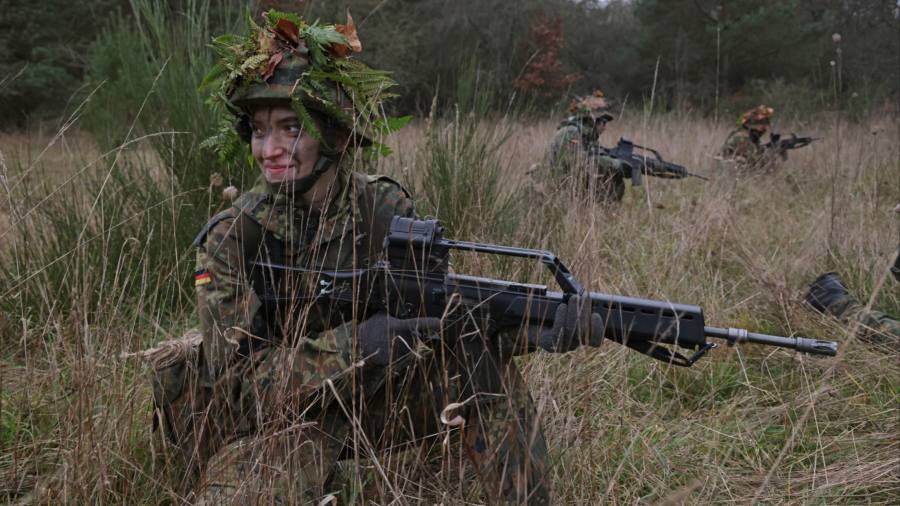
“Take a look at us! We’re a critical, grown-up nation now!” This was the self-congratulatory message Germany’s chancellor Olaf Scholz needed to convey to the world on Wednesday, when he stepped in entrance of the assembled nationwide press, accompanied by his overseas, defence, finance and inside ministers. What they had been about to announce was historic: Germany has simply given itself a nationwide safety technique for the very first time.
Throughout western capitals, sounds of languid clapping might be heard. Most individuals who’ve ever needed to write such technique papers categorical a powerful choice for some type of corporal punishment over the prospect of ever having to do it once more.
Nonetheless, practitioners concede that the train has actual makes use of. It forces a authorities to focus its assets, to elucidate its priorities, and to state the way it intends to realize them: to itself, to its voters, to its allies and to its adversaries. If accomplished nicely (and it generally is), it may possibly articulate a coherent, even compelling narrative to rally residents round a way of nationwide goal. This may be particularly necessary in an amazing disaster.
Within the US, new administrations have been required by Congress to provide a nationwide technique doc on the outset of their tenures since 1986. The UK, France, Canada and Japan all have revealed comparable paperwork and even a number of; so has Nato.
Even the herbivorous EU gave itself a technique in 2003 (up to date in 2016), galvanised by the horror of the 9/11 assaults on America by al-Qaeda and the spectacle of the Bush administration marching into Iraq on the filmiest of pretexts.
Germany, the powerhouse of continental Europe, was the one nation (besides Italy) within the G7 membership of the world’s best industrial democracies and not using a nationwide safety technique. Why?
Scholz’s chief of employees Wolfgang Schmidt prompted a quick uproar in Berlin final October when he steered that Germany’s public debates on nationwide safety had been nonetheless of their “teenage years”. His annoyance was directed on the consultants calling on the reluctant chancellor to provide Ukraine with the Leopard tanks it was begging for. However he did (albeit inadvertently) pinpoint a bigger problem. Germany’s juvenile part has lasted slightly longer than most: 34 years because the reunification of East and West Germany and with it the restoration of full sovereignty in 1990.
In fact, the “5 levels of grief” recognized by the psychoanalyst Elisabeth Kübler-Ross — denial, anger, bargaining, melancholy and acceptance — are equally relevant to Germany’s lengthy farewell to its adolescence.
Denial: Germans noticed the autumn of the Berlin Wall and the next restoration of “a Europe entire and free” as a validation of many years of reconciliation efforts; no nation on the continent believed as fervently within the principle of the “finish of historical past”.
Anger got here in June 1999, when German troops in Kosovo returned hearth with deadly impact for the primary time since 1945. Bargaining: regardless of multiplying troop deployments, Germany’s much-preferred instrument of overseas coverage remained the cheque ebook for 1 / 4 of a century.
Despair set in with the realisation that the bargaining actually wasn’t working anymore — not with Putin’s Russia, Xi Jinping’s China, the mullahs’ Iran nor with Donald Trump’s America. And acceptance got here when the so-called “site visitors gentle” coalition set itself the duty of writing a nationwide safety technique in its 2021 coalition settlement, recognising that after the incrementalism of the Angela Merkel years, it was time for some transformative change.
After all what they meant was social justice (the Social Democrats), saving the planet (the Greens) and returning to zero debt (the Free Democrats). What they acquired was a brutal full-scale invasion of Ukraine by Russia that threatens your complete European safety order.
So will Germans now as soon as once more be — within the immortal phrases of Tom Lehrer — “warlike and imply”? Effectively, the excellent news within the new technique doc is that it unequivocally endorses nuclear deterrence (traditionally a sticking level for Social Democrats and Greens); requires EU enlargement; and rightly highlights Germany’s home safety and the necessity to make it extra sturdy and resilient.
However there may be additionally some distinctly much less excellent news. The difficulty of whether or not Germany will attain its Nato defence spending purpose of two per cent of gross home product is fudged (with a defence price range of €50bn, it stays nicely quick of the €75bn it could want). And to name Russian imperialism a menace and China a systemic rival is not more than describing the established order. What if Russia expands its conflict? What if China actively takes its facet? What if the subsequent US president turns away from Europe?
In different phrases, the present deterioration of Europe’s safety local weather may but flip right into a strategic Ice Age. A nationwide safety council (or comparable advisory physique) might need been tasked with excited about the unthinkable — however the chancellery vetoed institutional improvements. In order that job stays with a governing coalition that in current weeks has typically appeared to teeter on the point of a nervous breakdown. Rising up is difficult to do.
This text has been corrected since authentic publication over the 9/11 assaults on the US